

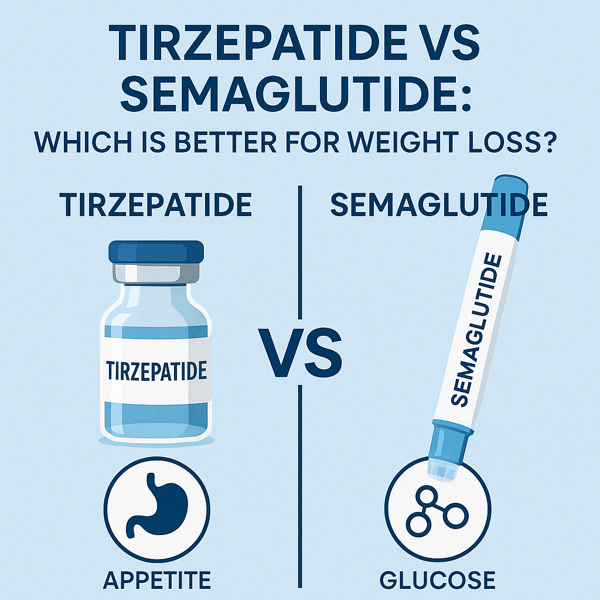


Semaglutide vs Tirzepatide: 7 Powerful Differences You Need to Know in 2026
Semaglutide and tirzepatide have completely reshaped the modern weight loss conversation. These injectable GLP-1 medications are now among the most discussed obesity management tools in healthcare, wellness, and metabolic medicine.
Although both medications support appetite suppression and long-term body weight reduction, they are not identical. Their hormone pathways, average clinical outcomes, side effect intensity, dosing schedules, and insurance coverage can differ significantly.
This complete guide compares semaglutide vs tirzepatide in detail, helping beginners understand which medication may align better with their weight management goals and medical profile.
Table of Contents
You can also read our complete beginner guide to weight loss pens to understand how GLP-1 medications support appetite management and obesity treatment.
Semaglutide vs Tirzepatide: Understanding the Main Difference
One of the biggest differences between these medications is how they interact with metabolic hormone pathways.
Semaglutide is classified as a GLP-1 receptor agonist. It mimics glucagon-like peptide-1, a hormone involved in appetite regulation, digestion speed, and satiety signaling.
Tirzepatide works differently because it activates both GLP-1 and GIP receptors simultaneously. This dual-action mechanism is why many obesity specialists consider tirzepatide one of the most advanced weight management medications currently available.
- Semaglutide → GLP-1 receptor agonist
- Tirzepatide → Dual GIP + GLP-1 receptor agonist
Both medications reduce appetite and improve fullness signals, but tirzepatide may produce stronger metabolic effects in certain individuals.
How GLP-1 and GIP Hormones Affect Weight Loss
To fully understand semaglutide and tirzepatide, it helps to understand the hormones involved.
GLP-1 hormones are naturally released after eating and help regulate hunger, digestion, and insulin response.
GLP-1 medications are commonly associated with:
- Reduced appetite signaling
- Earlier feelings of fullness
- Slower gastric emptying
- Reduced food cravings
- Improved portion awareness
Tirzepatide adds GIP receptor activity, which researchers believe may further improve insulin sensitivity and fat metabolism.

Research into GLP-1 medications continues expanding rapidly through organizations such as PubMed and other clinical research databases.
Semaglutide vs Tirzepatide Clinical Trial Results
Clinical trials remain one of the most important factors when comparing modern weight loss medications.
Both semaglutide and tirzepatide have produced significant weight loss outcomes when combined with nutrition planning, movement consistency, hydration, and long-term lifestyle intervention.
| Medication | Average Weight Loss | Major Trial |
|---|---|---|
| Semaglutide (Wegovy) | ~13.7% | STEP Trials |
| Tirzepatide (Zepbound) | ~20.2% | SURMOUNT-5 |
Head-to-head comparisons suggest tirzepatide may produce greater average body weight reduction than semaglutide in some patient populations.
These findings helped increase attention toward dual GIP/GLP-1 medications within obesity medicine and endocrinology.
Even with powerful medications, long-term results still depend heavily on sustainable habits involving nutrition, movement, sleep quality, hydration, and consistency.
Clinical data can also be reviewed through trusted sources like the New England Journal of Medicine .
Side Effects Comparison Between Both Medications
Digestive symptoms are among the most commonly discussed side effects associated with GLP-1 medications.
- Nausea
- Vomiting
- Constipation
- Diarrhea
- Bloating
- Reduced appetite
- Temporary fatigue
Tirzepatide may produce stronger early appetite suppression, which can sometimes increase digestive sensitivity during dose escalation.
Semaglutide is often described as slightly steadier during the early adjustment phase, although individual experiences vary significantly.
Most side effects improve gradually as the body adapts to weekly injections and dose increases.
You can also explore our guide on weight loss pen side effects for a deeper breakdown of common digestive symptoms and warning signs.
Dosing Differences and Escalation Schedules
Both medications require gradual dose escalation to improve tolerability and reduce digestive discomfort.
Semaglutide Dosing
- 0.25 mg weekly
- 0.5 mg weekly
- 1 mg weekly
- 1.7 mg weekly
- 2.4 mg weekly maintenance
Tirzepatide Dosing
- 2.5 mg weekly
- 5 mg weekly
- 7.5 mg weekly
- 10 mg weekly
- 12.5 mg weekly
- 15 mg weekly maintenance
Some individuals remain at lower maintenance doses if appetite control and body weight management remain effective without escalation.
You can learn more in our GLP-1 dosing schedule guide .
Cost Comparison in 2026
Cost remains one of the largest barriers to GLP-1 accessibility in 2026.
Insurance coverage varies significantly depending on region, employer health plans, and obesity treatment policies.
- Semaglutide is generally more widely covered
- Tirzepatide often carries a higher retail price
- Manufacturer savings programs may reduce costs
- Telehealth providers may offer structured access programs
Updated prescribing and approval information can be reviewed through the FDA .
Who Should Choose Semaglutide?
Semaglutide may be more suitable for:
- First-time GLP-1 users
- Individuals seeking gradual progress
- Patients sensitive to digestive side effects
- People with broader insurance coverage access
Semaglutide vs Tirzepatide: Who Should Choose Tirzepatide?
Tirzepatide may be preferred for:
- Higher BMI individuals
- Patients needing greater average weight reduction
- Users who plateaued on earlier GLP-1 medications
- Medically supervised aggressive obesity intervention programs
Real-World Results Beyond Clinical Trials
Although clinical trial data provides averages, real-world outcomes often vary based on lifestyle consistency, exercise habits, sleep quality, stress levels, and metabolic health.
Many users report that appetite suppression gradually becomes easier to manage over time as weekly routines become more structured.
Healthcare providers commonly recommend combining GLP-1 medications with:
- Protein-focused nutrition
- Hydration planning
- Resistance training
- Movement consistency
- Sleep optimization
- Stress management
Successful long-term weight management usually depends on maintaining sustainable habits rather than relying solely on medication.
You may also benefit from reading our guide on the best diet for weight loss pens .
Explore Advanced GLP-1 Weight Management Solutions
Browse medically structured weight management compounds, educational wellness resources, and appetite support solutions available through Aesthetics Fitness.
Frequently Asked Questions About Semaglutide and Tirzepatide
Which medication produces more average weight loss?
Tirzepatide currently demonstrates higher average body weight reduction in several major clinical trials.
Is semaglutide safer than tirzepatide?
Both medications have similar safety profiles, although semaglutide has been used clinically for a longer period.
Can you switch between semaglutide and tirzepatide?
Medication changes should only occur under qualified medical supervision with appropriate dose transition planning.
Do these medications replace diet and exercise?
No. Sustainable results still depend heavily on nutrition quality, physical activity, hydration, sleep, and long-term consistency.
Final Thoughts
Semaglutide and tirzepatide continue reshaping obesity management, metabolic wellness, and long-term appetite regulation strategies in 2026.
While tirzepatide may produce greater average weight loss for some individuals, semaglutide remains one of the most established and widely used GLP-1 medications available today.
The most effective choice ultimately depends on individual goals, medical history, side effect tolerance, insurance access, and physician guidance.
Disclaimer
This article is intended for educational purposes only and should not replace professional medical advice, diagnosis, or treatment. Always consult qualified healthcare professionals before beginning any medication or wellness strategy.